Thamel, Kathmandu, Nepal
Annapurna Base Camp Best Time to Trek:Full Season Breakdown
There isn't one perfect month for the Annapurna Base Camp (ABC) trek. There's a perfect month for you — depending on what you actually want out of the Himalayas.
A trekker chasing razor-sharp views of Annapurna South and Machhapuchhre will find their answer in late October. A trekker who's been dreaming of walking beneath blooming rhododendron forests will find theirs in April. Someone hoping to avoid the crowds of peak season might do better in early December or late February.
This guide is built around one idea: choose the experience first, then choose the month.
🧭 Quick Answer: Autumn (late September–November) and spring (March–April) offer the most favorable weather and visibility. Late October to mid-November is generally the single strongest window for clear mountain views; late March to mid-April is strongest for rhododendron blooms and milder temperatures.
| If You Want... | Choose... | Why |
|---|---|---|
| Clearest mountain views | October–November | Post-monsoon air clarity |
| Rhododendron blooms | March–April | Peak flowering on the mid-altitude trail |
| Warmest comfortable trekking | April–May | Milder daytime temperatures, longer daylight |
| Fewer trekkers | Dec–Feb, or shoulder weeks | Lower demand on trail and teahouses |
| Snowy Himalayan atmosphere | December–February | Higher chance of snow at higher camps |
| Best photography light | Late October or early April | Clean air, strong scenery |
| Classic first ABC trek | October–November | Most stable trail + visibility combo |
| Lush, green landscapes | Late May–June or September | Rain-fed greenery |
Autumn — September to November ✅
Autumn is Annapurna's signature season. Once the monsoon clears — usually by mid-to-late September — the air settles into some of the clearest conditions of the year. Trails dry out and Annapurna South, Hiunchuli, and Machhapuchhre often stand out in sharp detail.
Insider Tip: Late October through mid-November is the busiest stretch of the year for bookings, so plan accommodation ahead.
Spring is defined by color. Rhododendron forests between Ghandruk, Chhomrong, and Bamboo begin flowering in March, peaking through late March into April. Temperatures are milder than winter, days are longer, and views hold up well on clear mornings, though afternoon haze is more common than in autumn.
Winter isn't simply "the bad season" — it's a different trek. Nighttime temperatures at Machhapuchhre Base Camp and ABC drop well below freezing, and snow is a real possibility above roughly 3,000 meters. In exchange, teahouses are quiet, guides have more flexibility, and the Sanctuary takes on a stark, dramatic character.
Monsoon is possible, not recommended by default. Rain is frequent, trails are slippery, leeches appear in lower forest sections, and cloud cover regularly hides the mountains. In exchange, forests turn intensely green and teahouses sit nearly empty.
| Season | Months | Mountain Views | Temperature | Rain/Snow | Crowds | Best For |
|---|---|---|---|---|---|---|
| Autumn ✅ | Sept–Nov | Excellent | Cool, comfortable | Low | High | First-timers, photographers |
| Spring ✅ | Mar–May | Good–very good | Mild, warming | Low | High | Rhododendron lovers |
| Winter ⚠️ | Dec–Feb | Very good (clear days) | Cold | Possible snow | Low | Solitude, snow lovers |
| Monsoon ❌ | Jun–Aug | Poor–fair | Warm, humid | Frequent rain | Very low | Budget travelers |
January — The Quiet, Cold Month.
Empty trails, snow-dusted higher elevations, genuinely cold nights. Best for solitude-seekers with proper winter gear. Verdict: stark and rewarding for well-prepared trekkers.
February — Winter's Last Stretch.
Similar to January with milder temperatures by month's end. Snow still possible at altitude. Verdict: good for cold-tolerant, crowd-averse trekkers.
March — Rhododendrons Begin.
Lower forests start flowering, temperatures warm up, crowds still lighter than April. Verdict: an underrated shoulder month.
April — The Month of Rhododendron Dreams.
Mid-altitude forests hit peak bloom. Warm, pleasant days; solid morning mountain views; busier trail. Verdict: the most visually rich month on the ABC calendar.
May — Warm, Green, and Building Toward Monsoon.
Long, warm days; lush forest; more afternoon cloud by late month. Verdict: comfortable, best paired with early starts.
June — Monsoon Arrives.
Frequent rain, dropping visibility, muddy trails, leeches. Verdict: workable only with realistic expectations.
July — Deep Monsoon.
Among the wettest months; heavy rain, persistent cloud, intense green scenery. Verdict: the most challenging month for a first ABC trek.
August — Monsoon Continues.
Rain persists through most of the month with slight easing some years toward month's end. Verdict: similar constraints to July.
September — Autumn's Uncertain Opening.
Early month can carry monsoon patterns; by mid-to-late month, trails dry and crowds haven't yet arrived. Verdict: a genuine sweet spot for the patient trekker.
October — Autumn's Peak.
The most reliable month of the year for clear mountain views and dry trails — and the busiest. Verdict: the benchmark month for a classic ABC experience.
November — Autumn's Cooler, Quieter Cousin.
Early month extends October's clarity with fewer crowds after mid-month; late month turns noticeably colder. Verdict: a strong, quieter alternative to October.
December — Winter Begins.
Cold arrives quickly, snow more likely at altitude, crowds drop off fast. Verdict: rewarding but demanding — best for experienced or well-equipped trekkers.
| Month | Season | Weather | Views | Crowds | Verdict |
|---|---|---|---|---|---|
| January | Winter | Cold, clear | Good | Low | For hardy trekkers |
| February | Winter | Cold, improving | Good | Low | For hardy trekkers |
| March | Spring | Mild, warming | Very Good | Medium | ✅ Recommended |
| April | Spring | Warm, stable | Excellent | High | ⭐ Best Spring Month |
| May | Late Spring | Warm, some haze | Good AM only | Medium | ✅ Early May only |
| June | Monsoon | Heavy rain | Poor | Very Low | ❌ Not recommended |
| July | Monsoon | Heavy rain | Very Poor | Very Low | ❌ Not recommended |
| August | Monsoon | Heavy rain | Very Poor | Very Low | ❌ Not recommended |
| September | Early Autumn | Clearing rain | Variable | Medium | ✅ Late Sept good |
| October | Autumn | Stable, clear | Excellent | Very High | ⭐ Best Autumn Month |
| November | Late Autumn | Clear, cool | Excellent | Medium | ✅ Recommended |
| December | Winter | Cold, clear | Good | Low | Early Dec OK |
| Factor | October | April |
|---|---|---|
| Mountain visibility | Clearest of the year | Good, some afternoon haze |
| Temperature | Cool, crisp | Milder, warmer |
| Flowers | None | Rhododendrons at/near peak |
| Crowds | Very high, late month | High, mid-to-late month |
| Photography | Sharp, long-distance shots | Color and foreground interest |
| Overall experience | Most reliable, textbook trek | Most colorful, varied trek |
✅ Choose October if: clear mountain views are your top priority and you're comfortable booking ahead for a busier trail.
✅ Choose April if: you want color and floral scenery alongside solid views, without needing the absolute clearest skies.
Conditions change meaningfully with elevation.
Lower villages like Ghandruk and Jhinu Danda stay mild for most of the year outside monsoon. Mid-altitude forest around Chhomrong, Sinuwa, and Bamboo is cooler and shadier. Above Deurali, the trail opens into the Sanctuary, where temperatures drops noticeably — Machhapuchhre Base Camp and Annapurna Base Camp (approximately 4,130 m) see cold nights year-round, even when days feel pleasant in direct sun.
Wind and cloud typically build through the day, which is why early-morning views consistently outperform afternoon ones. Treat any specific temperature figure as an approximate seasonal range — actual conditions vary year to year, and a guide on the ground is the most reliable real-time source.
Spring: rhododendron forests in bloom, fresh greenery, snow-capped peaks behind color.
Monsoon: deep green cloud-forest, mist, swollen waterfalls, brief mountain glimpses.
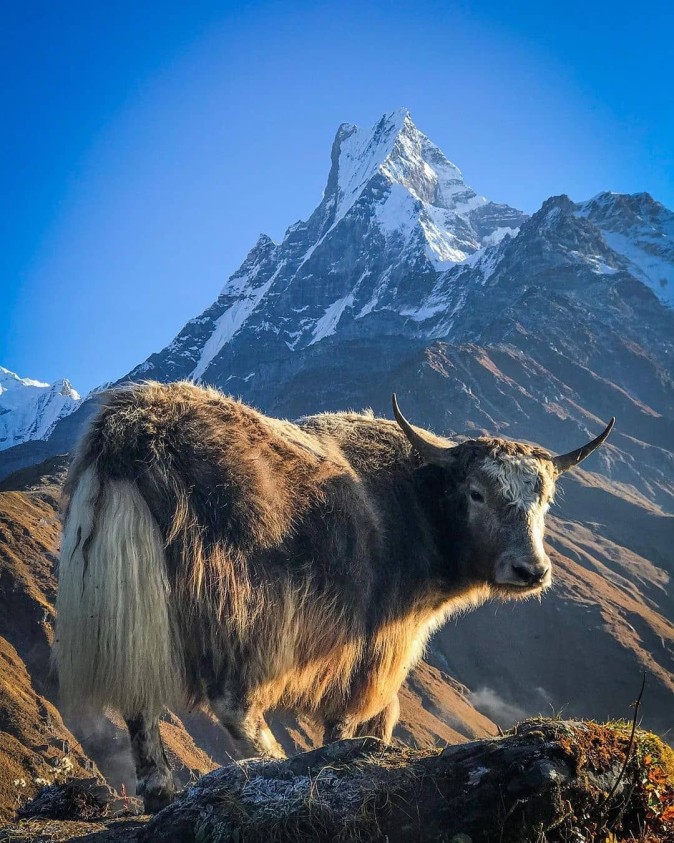
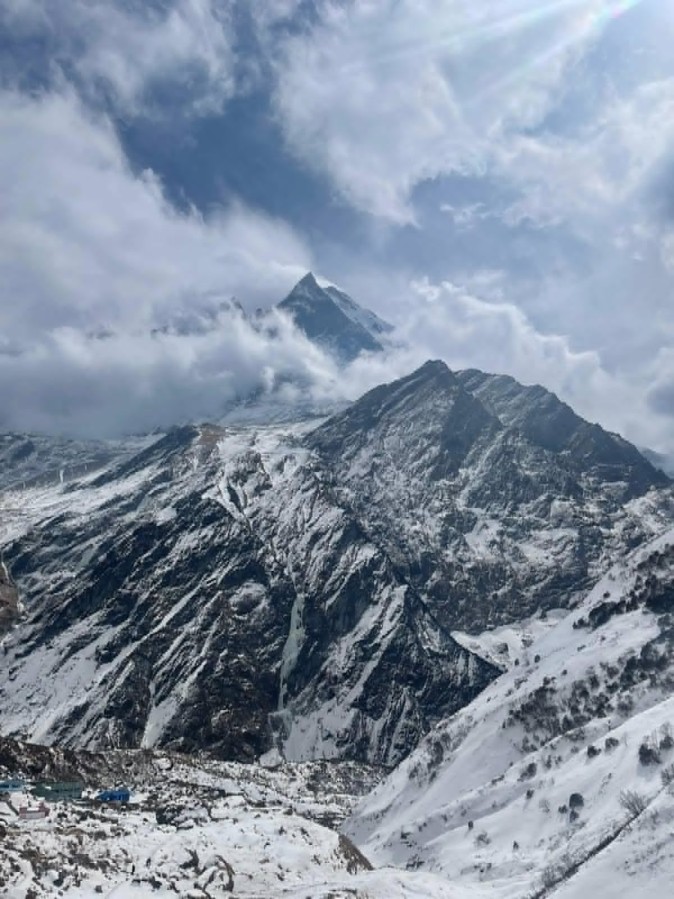
Autumn: crisp skies, sharp Himalayan silhouettes, golden late-afternoon light.
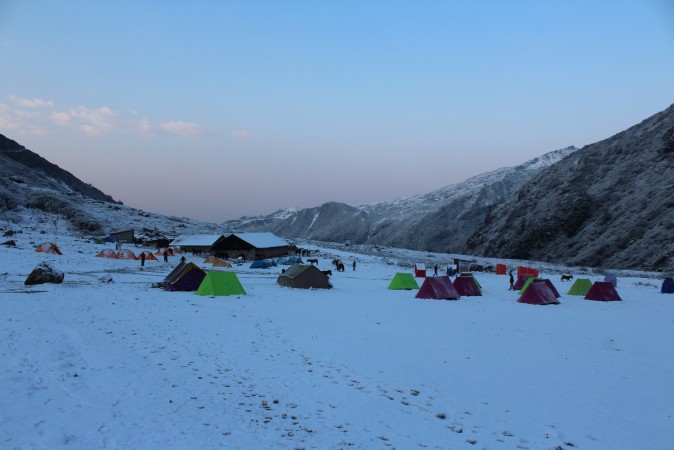
Winter: snow-dusted trails, frozen streams, a stark, quiet Sanctuary.
Early morning is the best window in every season, before cloud builds. Late October–early , November gives the cleanest air for sharp mountain shots. Early-to-mid April pairs strong morning visibility with rhododendron color. Winter offers dramatic snow contrast on clear days, with a narrower shooting window due to cold and shorter daylight.
Peak season runs through October–mid-November and most of April. Shoulder periods — early March, late November, early-to-mid September — see meaningfully fewer trekkers with reasonable weather. Winter is consistently quieter still, and monsoon quieter yet, though largely due to weather rather than trekker choice. Crowd levels vary by exact dates and teahouse operations, so treat this as a general tendency.
Season affects demand more than listed prices. Peak autumn and spring weeks mean less negotiating flexibility on rooms and more need to book guides and porters ahead. Off-season months see lower demand and more flexibility, though some higher teahouses may reduce services in the coldest winter weeks.
Insider Tip: Confirm current costs directly with a local operator close to your travel dates.
| First-time trekkers | October–November |
| Solo travelers | October/April for company, December for solitude |
| Families | April or early October |
| Photographers | Late Oct–early Nov (clarity), early-mid April (color) |
| Nature lovers | March–April, or June/September for greenery |
| Snow lovers | December–February |
| Budget-conscious trekkers | Winter or monsoon |
| Crowd-averse trekkers | Early March, late November, winter |
| Cold-sensitive trekkers | April–May |
| Maximum-view seekers | Late October–mid-November |
Editorial ratings out of 5, based on general seasonal tendencies — not official statistics.
| Category | Autumn | Spring | Winter | Monsoon |
|---|---|---|---|---|
| Mountain Views | 5 | 4 | 4 | 2 |
| Trail Conditions | 5 | 4 | 3 | 2 |
| Temperature Comfort | 4 | 5 | 2 | 3 |
| Photography | 5 | 4 | 4 | 2 |
| Flowers | 1 | 5 | 1 | 2 |
| Snow/Winter Character | 2 | 1 | 5 | 1 |
| Crowds (lower = more crowded) | 1 | 2 | 5 | 5 |
| Budget-Friendliness | 2 | 2 | 4 | 5 |
| Overall Experience | 5 | 4 | 3 | 2 |
🗓️ January:
Pack for real winter conditions, confirm open teahouses ahead, and build in buffer days for possible snow delays.
🗓️ April:
Book ahead for the busy second half of the month and plan early starts for the best mountain visibility.
🗓️ July:
Choose quick-drying gear, expect leeches and wet trails, and keep your itinerary flexible around weather delays.
🗓️ October:
Book accommodation and guides well ahead, especially the last two weeks, and expect the busiest trail of the year.
🗓️ December:
Prioritize serious cold-weather gear, confirm teahouse status at altitude, and plan a shorter daily itinerary for shorter daylight.
Good weather does not remove altitude risk. Annapurna Base Camp sits at approximately 4,130 meters, and symptoms can occur in clear, sunny conditions as easily as in poor weather.
A gradual ascent, proper acclimatization, hydration, and honest recognition of symptoms matter in every season. Trekking with an experienced guide who can make real-time decisions — including turning back when needed — remains one of the most reliable safety factors, independent of month.
Myth 1: You can only trek ABC in spring or autumn.
Reality: Winter and monsoon are possible with the right preparation and expectations.
Myth 2: October guarantees perfect weather.
Reality: It's the most reliable month, not a guarantee.
Myth 3: Rhododendrons only bloom in April.
Reality: Blooming starts in March and progresses through April.
Myth 4: Winter treks are too dangerous to consider.
Reality: They're viable with the right gear, guide, and itinerary flexibility.
Myth 5: Monsoon trekking has nothing to offer.
Reality: It offers the greenest scenery and quietest teahouses of the year.
Weather in the Annapurna Sanctuary can shift within hours, and route conditions change week to week outside peak season. An experienced local guide brings real-time knowledge no article can replace: which sections are affected by current weather, which teahouses are open, and when a safety call — like turning back before a pass — is the right one.
This is where Orbit Nepal Adventure adds practical value beyond a printed itinerary. Whether you're planning an Annapurna Base Camp Trek for peak autumn clarity, an Annapurna Circuit Trek with more time in hand, or comparing options across Nepal Trekking Packages, local guidance turns a seasonal guide into an actual itinerary.
Q. What is the best time for Annapurna Base Camp Trek?
➤ Autumn (late Sept–Nov) and spring (Mar–Apr) offer the most reliable combination of clear views and stable trail conditions.
Q. Which month is best for Annapurna Base Camp Trek?
➤ October rates best for visibility; April rates best for color and milder temperatures.
Q. Is October good for Annapurna Base Camp?
➤ Yes — the clearest, driest month of the year, though also the busiest.
Q. Is April good for Annapurna Base Camp?
➤ Yes — good visibility combined with rhododendron blooms and milder temperatures.
Q. Can I trek ABC in winter?
➤ Yes, with proper cold-weather gear and awareness that snow is possible above roughly 3,000 meters.
Q. Can I trek ABC during monsoon?
➤ Yes, though expect frequent rain, reduced visibility, and leeches in lower forest sections.
Q. How cold is Annapurna Base Camp?
➤ Nighttime temperatures at roughly 4,130 m regularly drop well below freezing outside summer; exact figures vary year to year.
Q. Does it snow at Annapurna Base Camp?
➤Yes, snow becomes increasingly likely from late November through February.
Q. Is Annapurna Base Camp crowded in October?
➤ Yes — especially the second half of the month, the busiest period on the trail.
Q. When are rhododendrons blooming on the ABC trail?
➤ Typically beginning in March and peaking through late March into April.
Q. Is September a good time for ABC?
➤ The first half can carry monsoon patterns; the second half typically offers clearing skies and lighter crowds.
Q. Is November too cold for Annapurna Base Camp?
➤ Early November stays comfortable; nights turn noticeably colder by late month.
Q. What should I pack for ABC depending on the season?
➤ Layered clothing for autumn/spring, heavier insulation for winter, waterproofs and leech protection for monsoon.
Q. How many days are needed for the ABC trek?
➤ Standard itineraries typically run 7 to 12 days depending on route and pace.
Ready to walk into the heart of the Annapurna Sanctuary?Contact Orbit Nepal Adventure today for customized itineraries for easier and adventurous trek.
📲 Contact us directly on WhatsApp: Chat with us on WhatsApp
🌐 Visit: orbitnepaladv.com
📧 Email: orbitnepaladv@gmail.com
💬 Whatshapp: 977-9841766021
Our Package : Annapurna Base Camp